
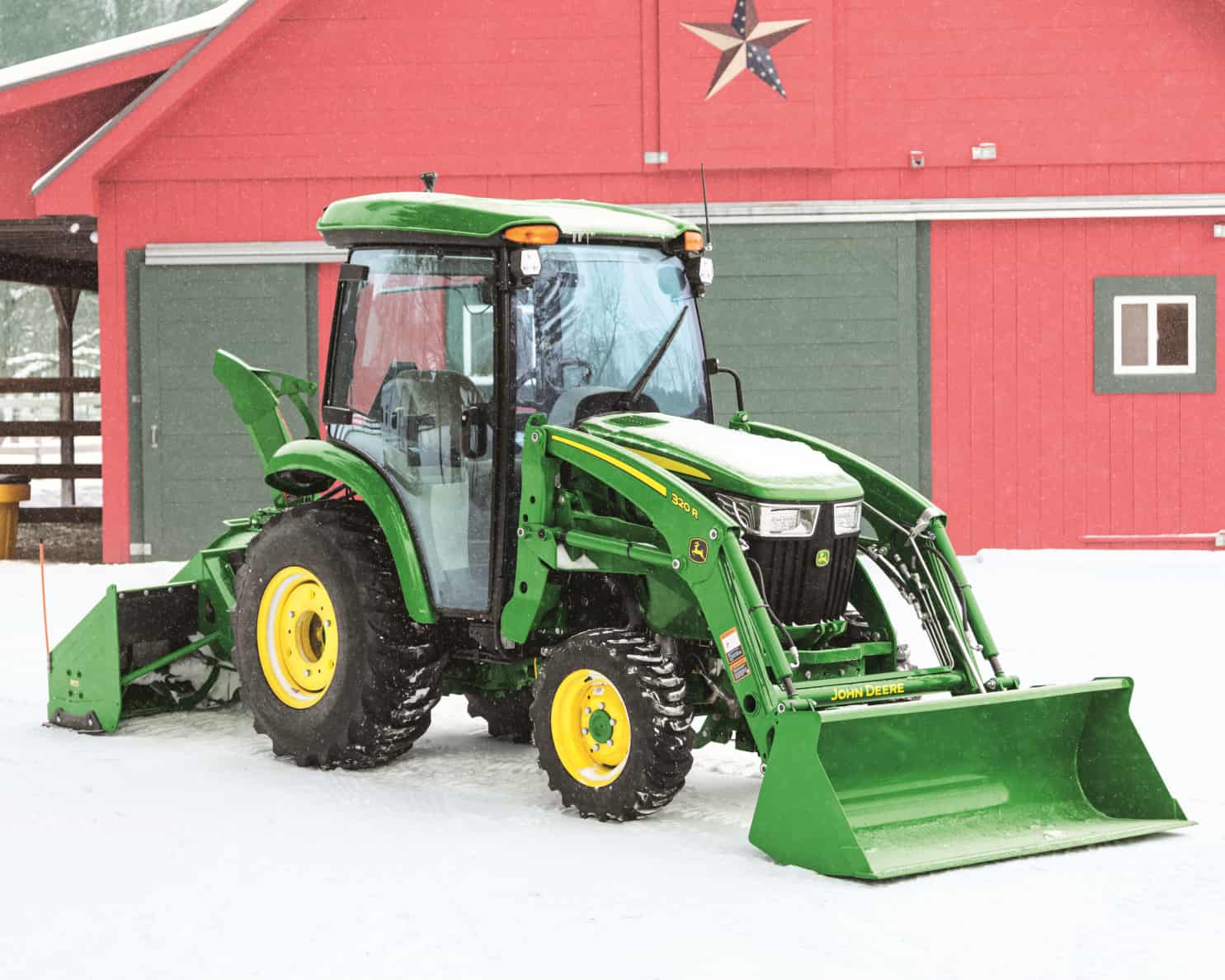
In the Northeast, off-season equipment storage can be tricky–our harsh winters can take a toll on your equipment if you’re not careful. Here, we offer a few tips and tricks to help you rest easy knowing your equipment will be in top shape come spring.
Find Your Nearest United Ag & Turf
1. Clean and Inspect
First thing, thoroughly clean all equipment. Remove mud, dirt, and other residue that could trap moisture and lead to rust. It’s important to pay specific attention to your machine’s moving parts. Once clean, visually inspect for existing damage, wear, or leaks. Address repairs immediately before temperature drops cause more damage. Additionally, take time to inspect for critter nests in and around your engine. Critters can chew through a tractor’s electrical system, causing unwanted damage and potential fires.
2. Lubricate and Protect
Extreme cold weather can cause metal to contract. Apply winter-grade grease to all pivot points, hinges, and bearings to minimize the risk of corrosion and unwanted stress. It’s also a good idea to apply a rust inhibitor to any exposed (unpainted) metal surfaces.
3. Fluid Top-Offs
Refer to your operator’s manual for recommendations on winter-grade oils and antifreeze. With properly winterized fluids, double-check that your machine is topped off: check hydraulic oil, engine oil, and coolant. Additionally, you’ll need to top off and winterize fuel to keep it from thickening or freezing–give us a call or visit for winterizer or antigel.
4. Battery Maintenance
Sitting out in the cold will drain battery power, making it difficult or impossible to start your tractor when you need it. To avoid this, disconnect your battery and store it in a warm, dry place. If you’ll be using your equipment throughout the season, invest in a battery maintainer to ensure that your battery stays charged.
5. Tires and Tracks
Be sure to properly inflate all tires before winter, as extreme cold can cause flattening or cracking. For tracked equipment, periodically moving your machine can help to prevent cracking and unnecessary wearing.
6. Equipment Storage
Ideally, your equipment should be stored in an insulated or heated space like a garage to minimize exposure to snow, ice, and other rust risks. If indoor storage isn’t an option, invest in heavy-duty, waterproof protective covers to help protect against the elements and unwanted critters.
7. Periodically Check and Run
Like any machine, it’s potentially harmful to leave your equipment untouched for months. Instead, you should check on it periodically to ensure that all systems are still functioning properly. Conduct visual inspections, and run the engine for a few minutes every couple weeks. This will help circulate fluids and prevent freezing or corrosion.
8. Reach Out
For more specifics on your equipment, or more tips and tricks we haven’t mentioned above, reach out to your local United Ag & Turf. We’ll be happy to learn more about your needs, and help guide you through a successful storage season, so you’re ready to work in the spring.