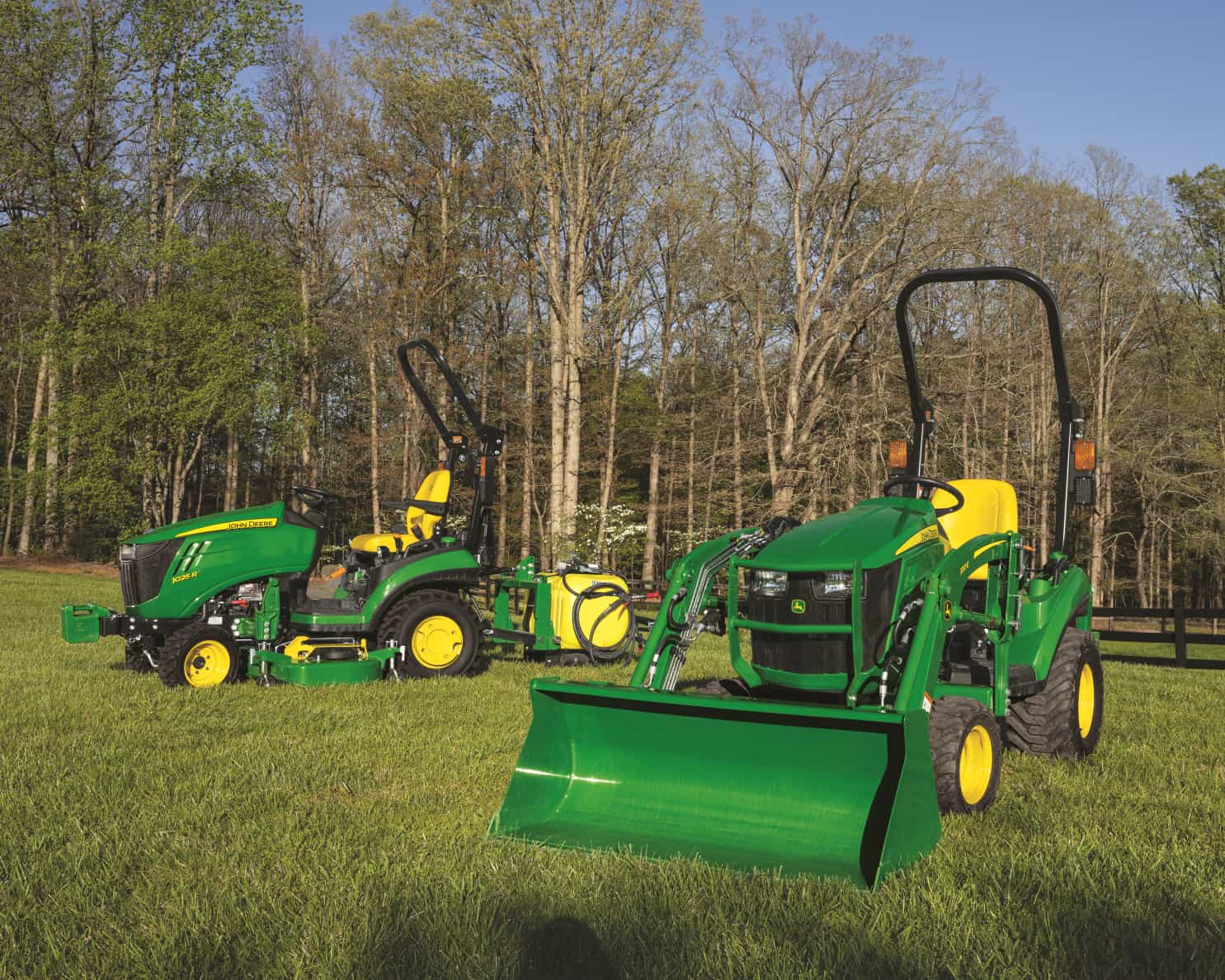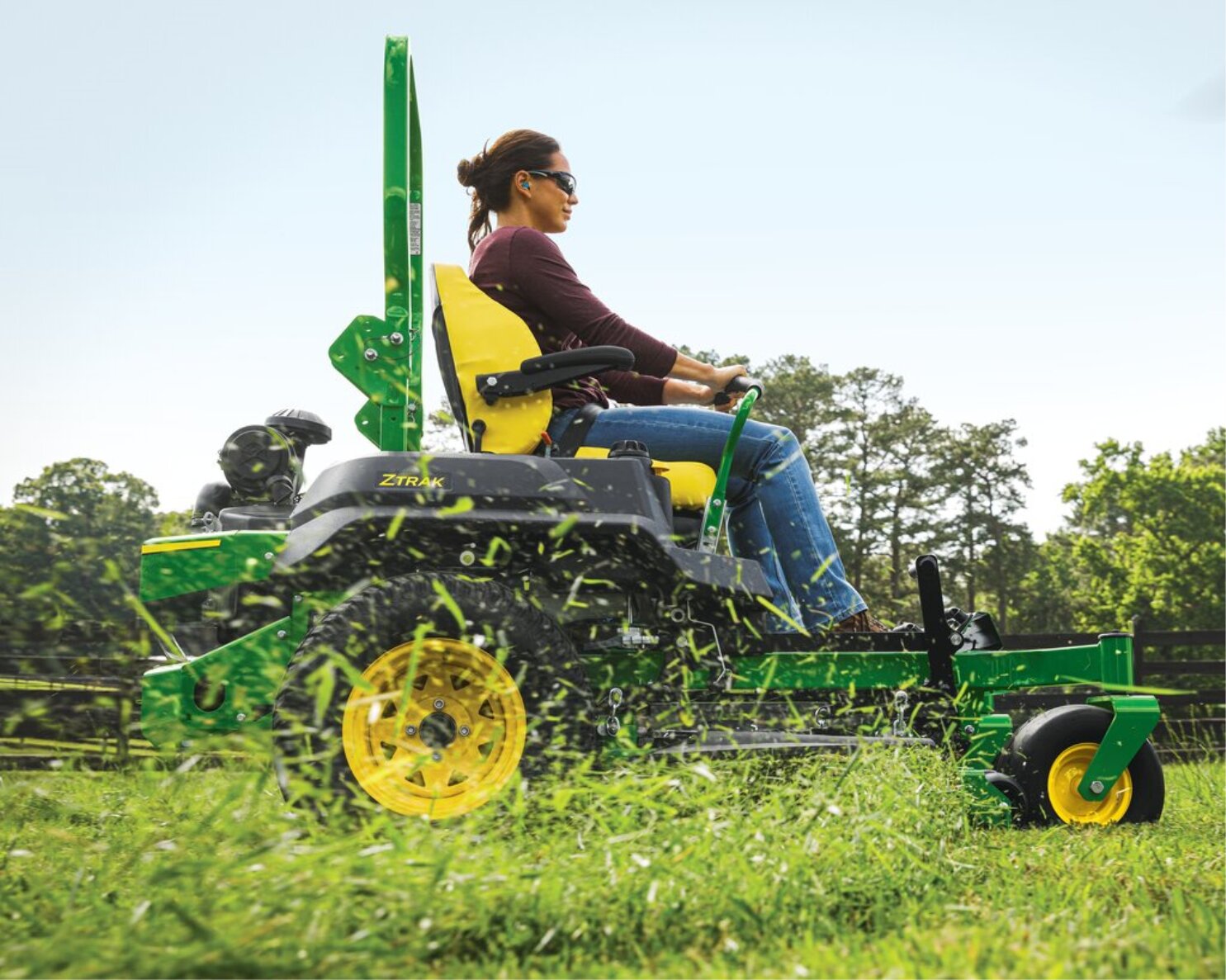
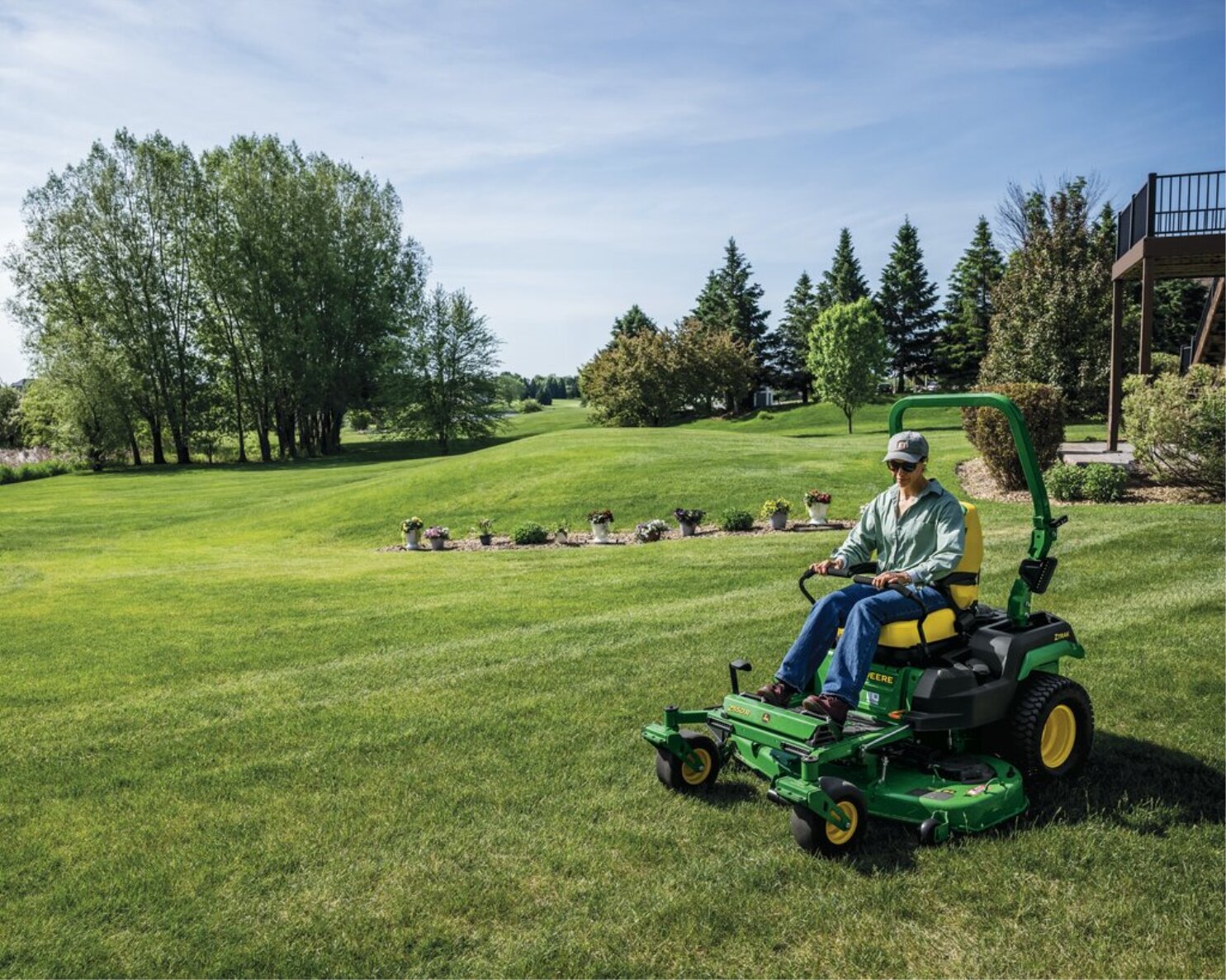
Choose a zero-turn if your lawn has lots of trees, beds, and curves, and you want to cut mowing time. Choose a lawn tractor if you have slopes, want to tow a cart or spreader, or prefer a steering wheel. Zero-turns are faster around obstacles. Lawn tractors handle hills and pull attachments better.
Property shape matters more than property size. A wide-open two acres and a two-acre lot cut up by a dozen maples are different jobs.
Find Your Nearest United Ag & Turf
How Do Lawn Tractors and Zero-Turns Compare?
| Lawn Tractor | Zero-Turn | |
| Steering | Steering wheel | Twin lap bars |
| Mowing speed | Slower | Faster |
| Slopes | Better, more predictable | Less stable on steep grades |
| Towing | Rear hitch standard | Limited availability |
| Attachments | Carts, spreaders, baggers, snow equipment | Baggers and mulch kits |
| Deck sizes | 42-54″ | 42-60+” |
Which Handles Slopes Better?
A lawn tractor. Its weight sits lower and more evenly, and a steering wheel gives you steady control when a wheel starts to slip. On a zero-turn, the drive wheels do the steering, so losing traction on one side costs you both speed and direction at once.
This is the deciding factor on a lot of Northeast properties. Rolling terrain, stone walls, and drainage swales are common here, and a grade that feels mild on foot behaves differently under a mower.
Which Mower is Faster?
A zero-turn, and the gap widens with obstacles. It pivots in place, so you trim around a tree in one motion instead of backing up and lining up again. On a lawn with trees, beds, a swing set, and a shed, that saves real time.
On open ground the gap narrows. Ground speed still favors the zero-turn, but a lawn tractor with a 54-inch deck covers open lawn efficiently. One caution: on a zero-turn, top speed and cut quality are not the same setting. Running wide open in thick grass leaves stragglers and clumps. Slow down a notch, and the cut evens out.
Which One Can Tow and Run Attachments?
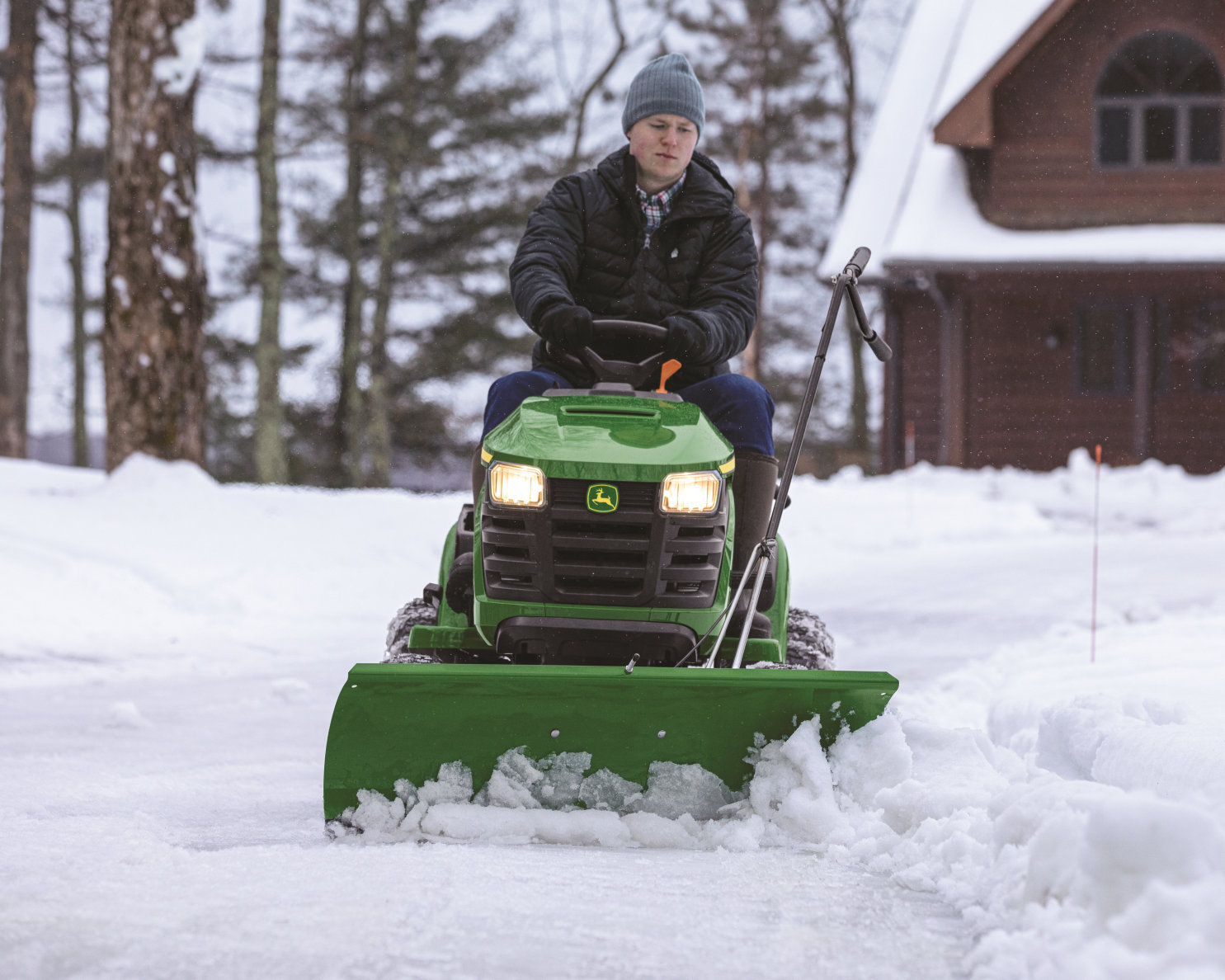
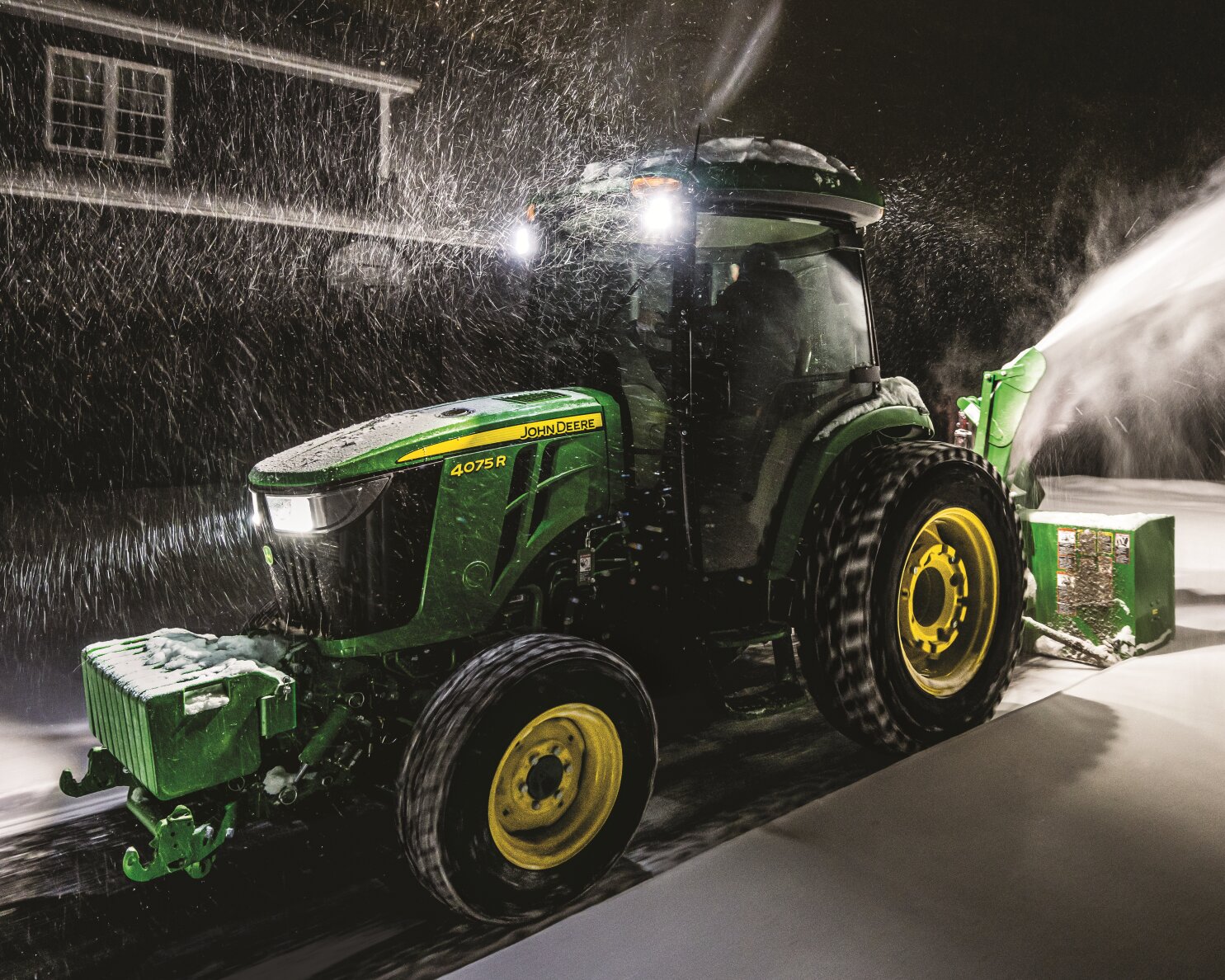
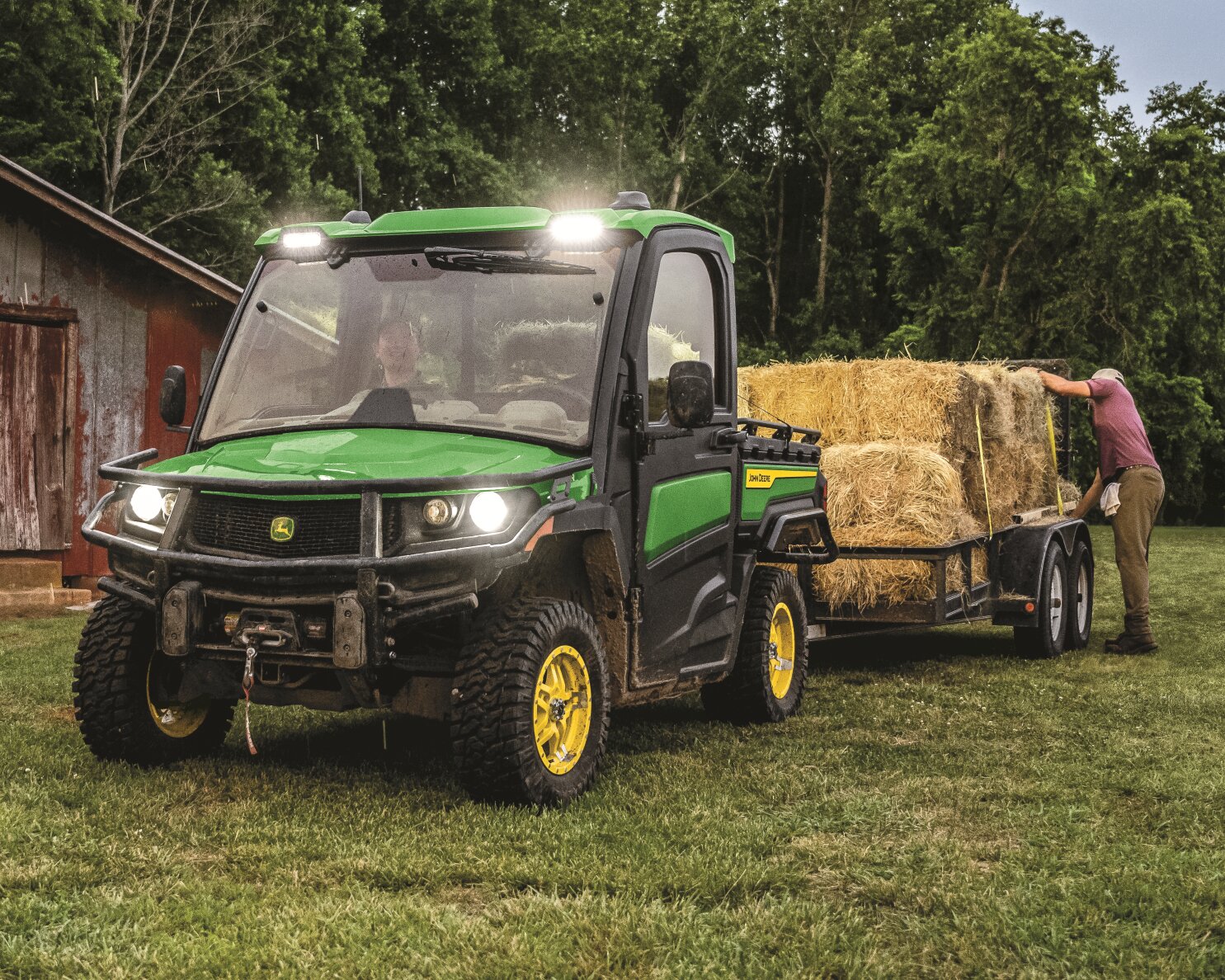
The lawn tractor. A rear hitch is standard, so you can pull a cart of mulch, a spreader, a dethatcher, or a plug aerator. Many models accept a bagger, a mulch kit, and front-mounted snow equipment.
That last one matters here. If one machine has to mow in July and move snow in January, a lawn tractor is the more flexible choice. Zero-turns mow very well and do little else. Some accept a bagger or mulch kit, but towing capacity is limited and varies by model, so confirm before you buy.
Which Gives a Better Cut?
Both cut well when matched to the property. The differences show up at the edges.
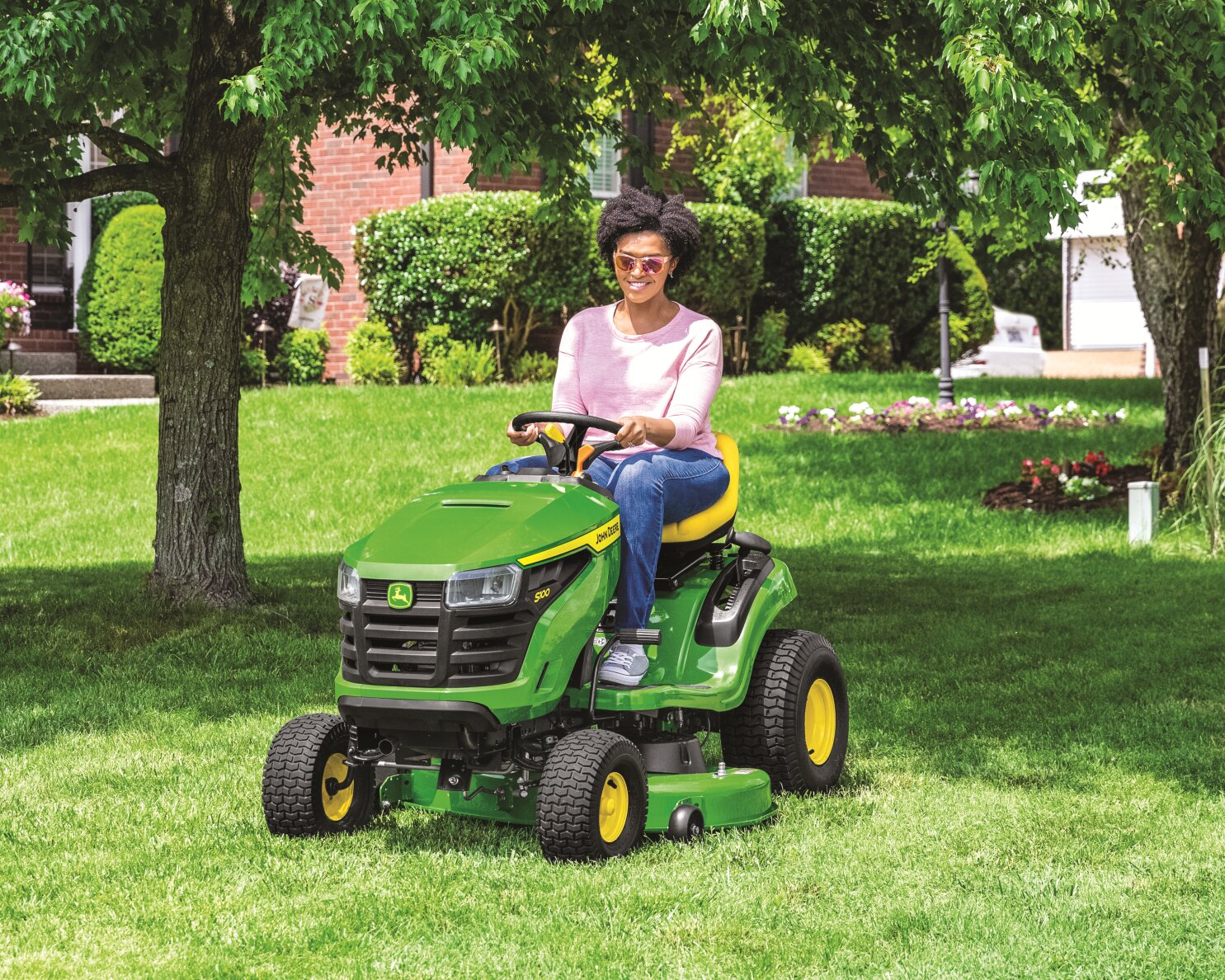
Zero-turns usually have a wider deck and a tighter trim edge, so you leave less for the string trimmer. Lawn tractors track more predictably on uneven ground, and the narrower stance is easier to steer through tight gates and between beds.
The thing that affects cut quality most is not the machine… it’s blade sharpness, deck level, and mowing height.
Which Is Right for Your Property?
| Property Features | Recommended Choice |
| Under 1 acre, open | Lawn tractor |
| 1-3 acres with obstacles | Zero-turn |
| Any size with notable slopes | Lawn tractor |
| 2+acres, open, want to finish fast | Zero-turn |
| You need to tow or plow snow | Lawn tractor |
| Tight gates or narrow access | Lawn tractor |
Contact United Ag & Turf Today
Frequently Asked Questions
Can a zero-turn mower handle hills?
Mild slopes, yes. On steeper grades, a lawn tractor is more stable and more predictable. Check the slope rating in the operator’s manual, and always mow across a slope rather than up and down.
Can you tow a cart with a zero-turn?
Some models tow light loads, but capacity is limited and varies. If towing is a regular job, choose a lawn tractor.
How much faster is a zero-turn?
Most owners report cutting mowing time by about a third to a half, with the biggest gains on lawns full of obstacles.