
A common question when deciding your ideal compact tractor is: what size is your acreage? Believe it or not, that’s not the most productive question. Acreage tells you how far you’ll drive your tractor. Before choosing a John Deere series or model, start with the most important question: what kind of work do you need it to do?
A general rule of thumb is that the John Deere 1 Series fits properties under 5 acres with light chore work. The 2 Series covers 5-15 acre properties with routine loader work. The 3 Series provides a step up in power to run larger implements and support ground engagement. Your heaviest job decides which tractor is right for your property.
Find Your Nearest United Ag & Turf
Start With Your Heaviest Job
Make a list of the tasks you handle regularly, along with the bigger projects you’ve been meaning to tackle. Will you be moving manure, grading a long gravel drive, or clearing packed snow? The toughest jobs on your list will help establish the minimum horsepower, loader capacity, and PTO capability required to get the work done efficiently. Shop for your heaviest job and all the lighter work will come free of charge.
1 Series: Small Properties and Light Chore Work
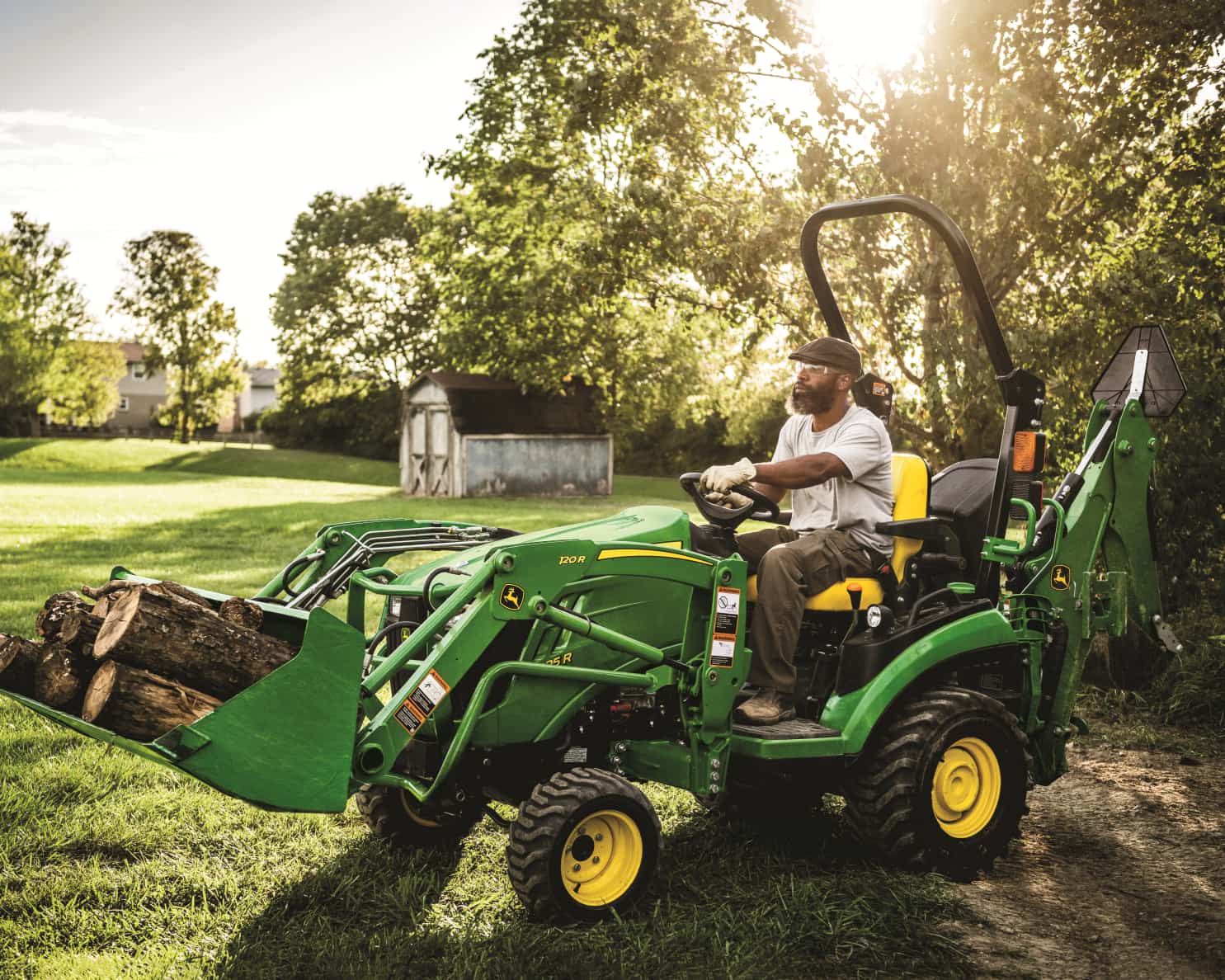
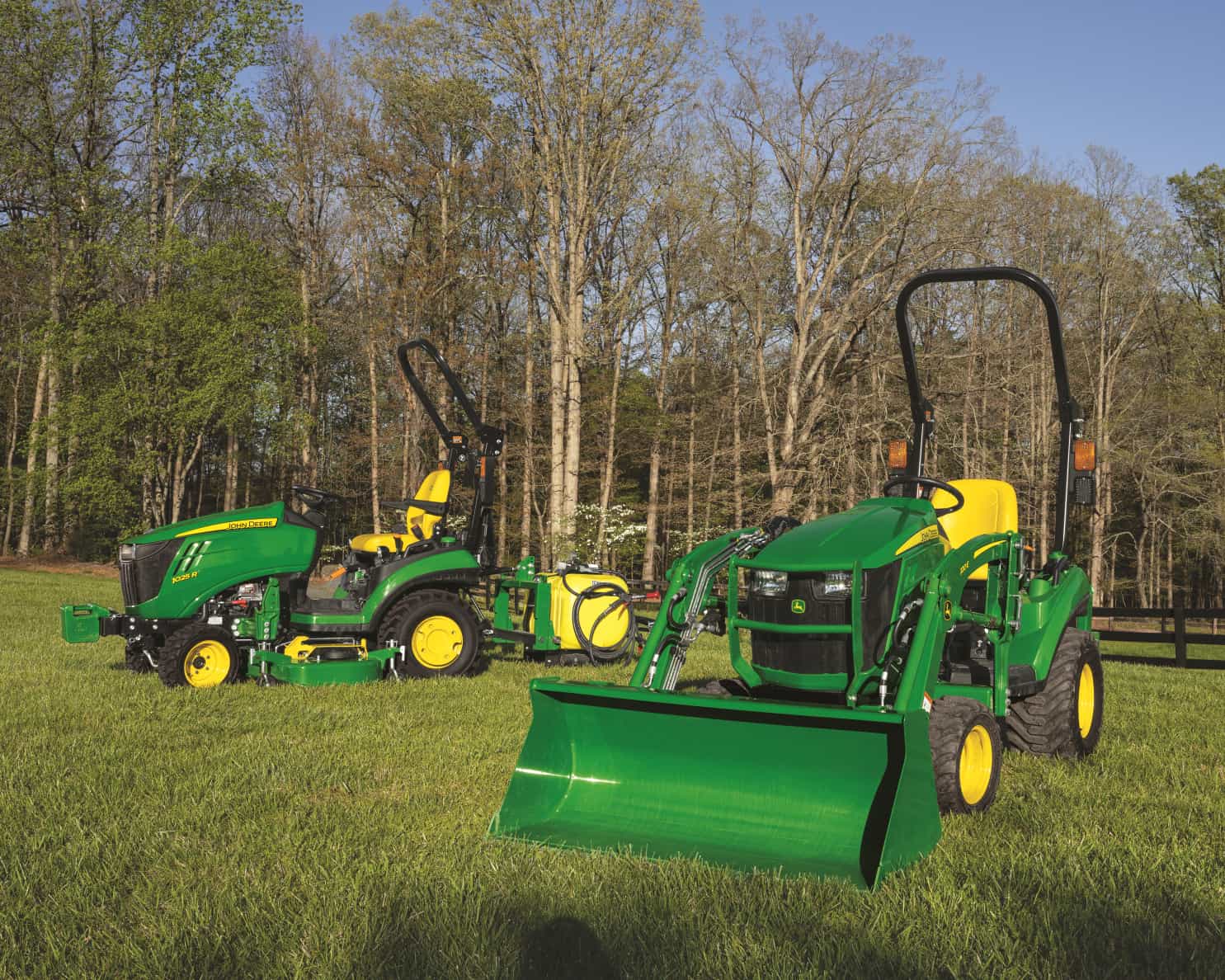
The 1 Series consists of two models, making up John Deere’s sub-compact tractor line, ranging from 23-25 engine horsepower. The 1023E and 1025R are two of our most popular models for a reason: they are designed to accomplish most small-acreage homeowners’ needs while still fitting in a standard garage.
The 1 Series can handle a wide range of attachments, including a front loader, mower deck, snow blower, small box blade, and more. Despite its versatility, it won’t fit your needs if you’re routinely hauling heavy material all day or brush hogging a sizable feed lot. If your property is well-maintained, under five acres, and doesn’t require excessively heavy lifting, the 1 Series is likely the right fit for you.
2 Series: The Landowner’s Middle Ground
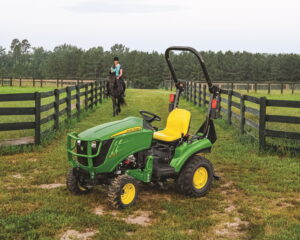
The 2 Series ranges from 25 to 38 horsepower and adds real loader capacity over the 1 Series. If you’re running a New England hobby farm, horse property, or simply managing a larger residential property, the 2 Series is likely a better fit for your needs.
This is the smallest series that will comfortably handle a full workday of loader cycles. It can power mid-size rotary cutters, larger box blades, or a rear-mounted snow blower that won’t overwhelm your PTO power. With a slightly higher base weight, you’ll benefit from better traction on our frequently wet soil. If you keep livestock, maintain a significant amount of gravel, or manage more than five acres, start your comparison here.
3 Series: Larger Implements and Real Ground Engagement
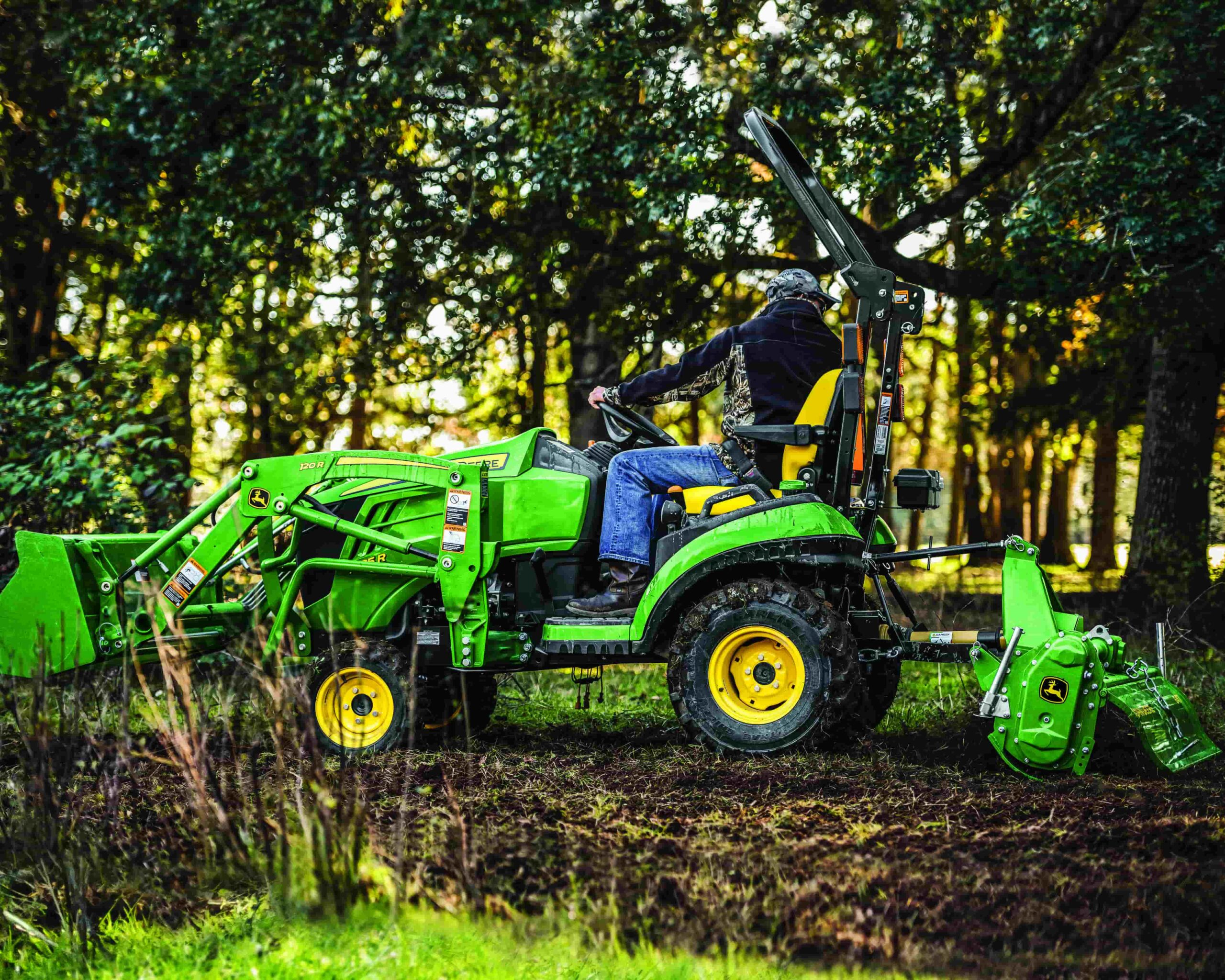
The 3 Series ranges from 25 to 46 horsepower, and increases your capabilities to include serious implement use. A heavier frame, higher hydraulic power, and significantly increased lift capacity allow you to run tools the smaller lines can’t handle. If your task list consists of tillage, light hay management, post hole digging, or heavy loader work, the 3 Series is your go-to.
The 3 Series does come with a small trade-off, though: size. A 3 Series requires more storage space, makes wider turns, and may come with larger implements that all require their own storage space.
Three Things You’re Probably Underestimating
Slope
Hilly properties require a higher frame weight and lower center of gravity. In many situations, this is even more important than horsepower. Undersizing on a slope presents a safety problem, not just a performance problem.
Storage Needs
Measure your garage or shed opening, and any gates you will need to pass through. Loader arms, wide tires, and a rollbar can add up fast.
Winter Work
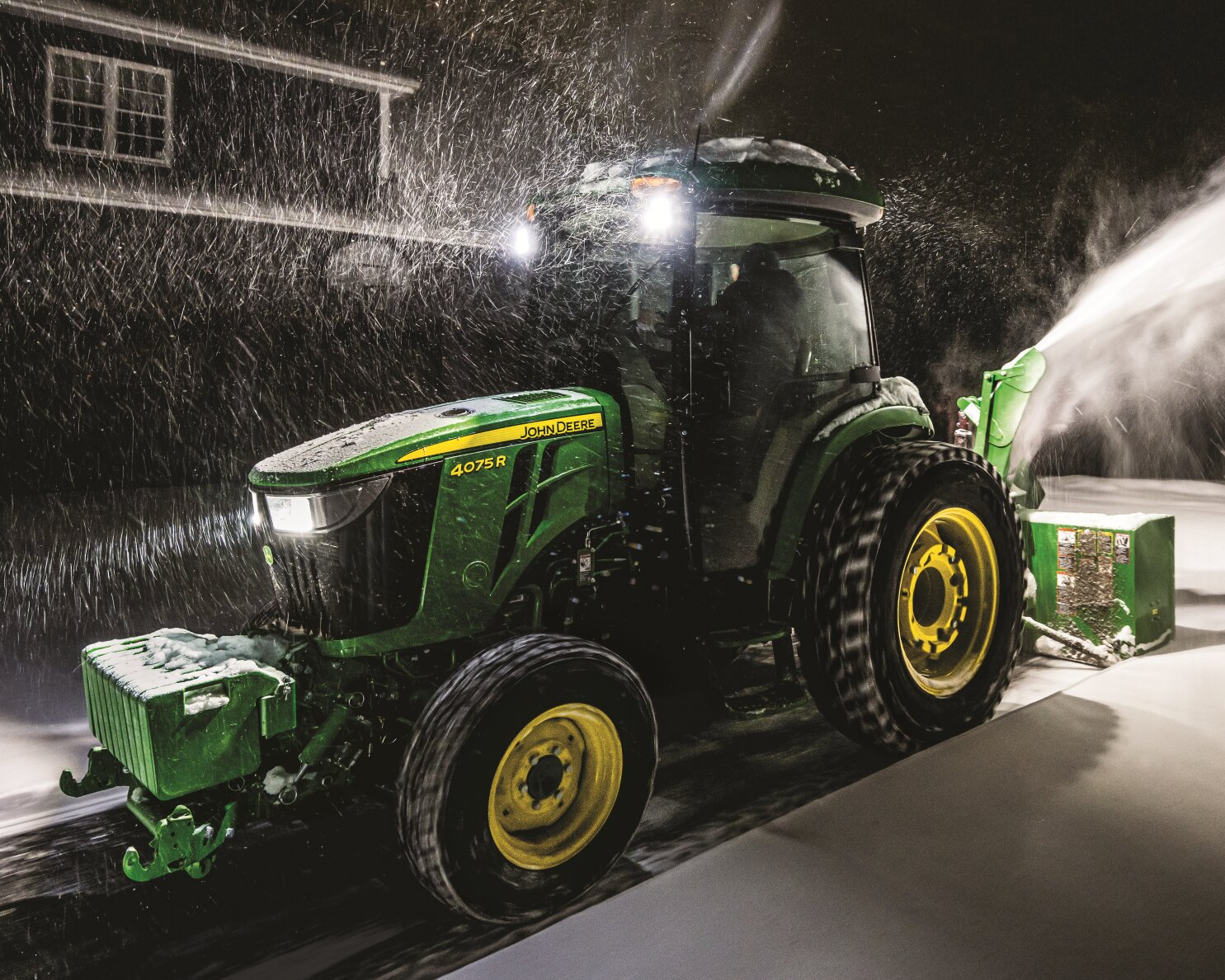
If you’ll be putting your tractor to work in the snowy season, size it to the worst storm of the year, not the average one. The last thing you want is a stalled machine in the middle of a snowstorm.
Decide Before You Visit
Before you stop by your local United Ag & Turf, consider three factors: your heaviest recurring job, your storage capacity, and the attachments you plan to pair your tractor with. Those answers will narrow your choices faster than any spec sheet.
After you’ve considered these factors, stop by and say hi! Our team of experts will be happy to put you in the driver’s seat to experience the machine for yourself. Check out loader visibility, comfort features, and basic controls.
Frequently Asked Questions
Can a John Deere 1 Series handle snow removal in the Northeast?
For short residential driveways, yes. Pair with a blower or a blade. For long drives, heavy snowfall, or frequent wet snow, most owners opt for a 2 Series or larger.
What’s the real difference between the John Deere 2 Series and 3 Series?
Frame weight, hydraulic capacity, and lift. The 3 Series runs larger implements for longer stretches of time. If your work is infrequent, the 2 Series is plenty of machine. If you’re carrying out heavy lifting more often, go with the 3 Series.
How many acres do I need to justify a compact tractor?
There’s no acreage minimum. Consider the actual needs of your property, and assess where a compact tractor could ease your workload. If you’re doing some light loader work, look at the 1 Series. If you’re doing heavy lifting, managing a modest amount of livestock, or light hay work, start your comparison with the 3 Series.