
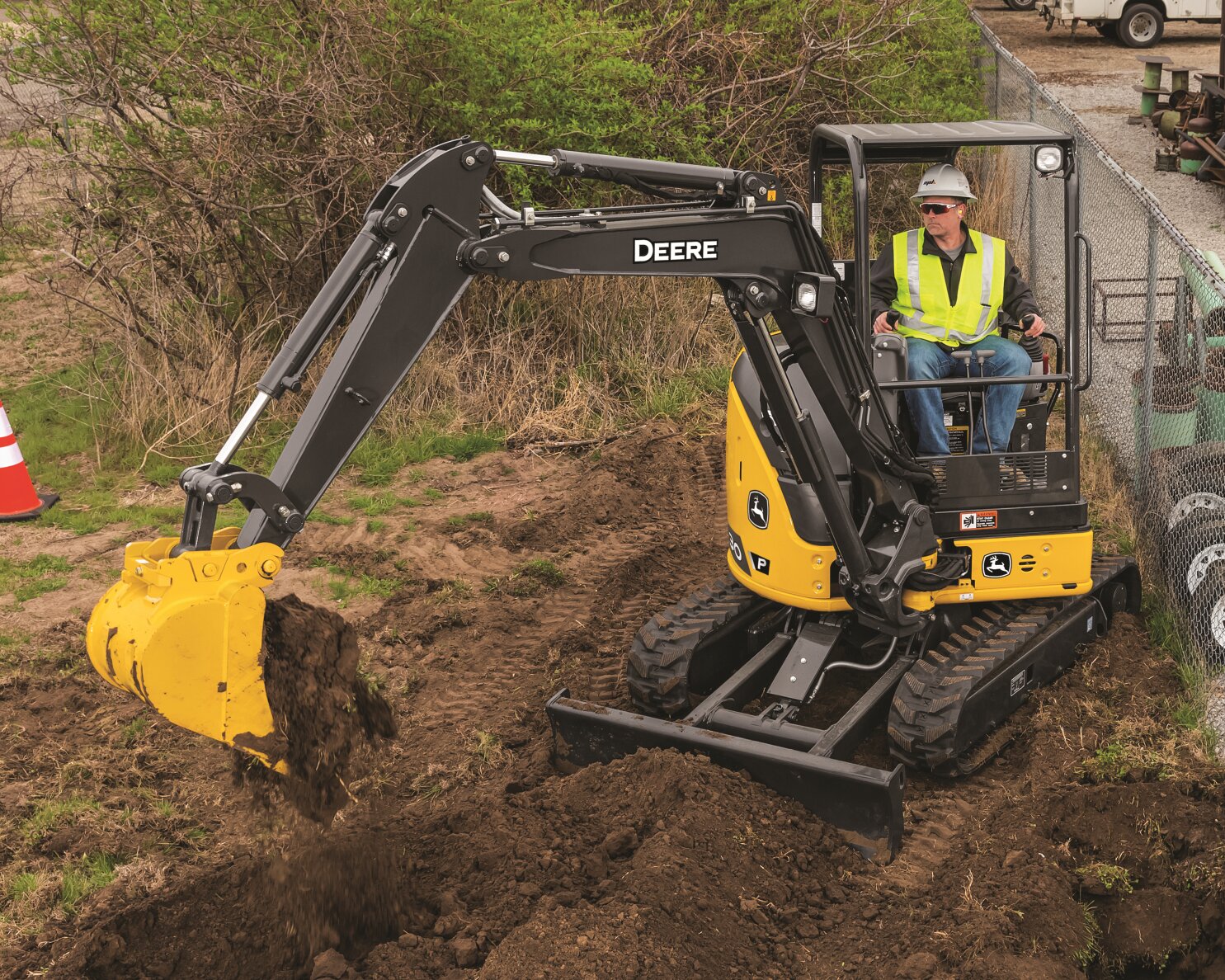
Every spring, Northeast property owners face the same issues: low spots that hold water, clogged drainage ditches, eroded pond banks, and more. These problems won’t solve themselves—whether you’ve got standing water around structures or in fields, it’s going to cost you in livestock health, crop damage, equipment wear, and time.
A mini excavator is an excellent tool for tackling seasonal water management work on rural and agricultural properties. Here’s a breakdown of when you’ll need one, what it can do, and whether you’ll need a full-size excavator for your project.
Find Your Local United Ag & Turf
Why Choose a Mini Excavator (Compact Excavator)?
Mini excavators, typically in the 1-6 ton class, are purpose-built for precise digging in tight spaces. That makes them a go-to choice for most pond and drainage projects on private residential and agricultural properties. Here are some common uses:
Pond Excavation and Reshaping
Whether you’re building a pond from scratch, deepening an existing one, or reshaping eroded banks, a mini excavator offers precision that you won’t be able to achieve with larger equipment. With reduced ground pressure, you can work close to the water’s edge without damaging bank stability.
Drainage Ditch Maintenance
Seasonal drainage ditches tend to fill with sediment and debris. A mini excavator cleans them efficiently and can even reshape or deepen channels that are no longer working to move water. For new drainage construction, the precision of a mini excavator is hard to beat.
Culvert Work
Collapsed or clogged culverts are a common spring issue. A mini excavator can handle replacement and repair with far less site disturbance than large equipment.
Chronic Wet Spots
Paddocks and fields with subsurface drainage issues can result in constant wet spots. A mini excavator can be used to open up the area, install proper drainage, and backfill in a fraction of the time it would take to do it by hand.
Compact Utility Tractor with Backhoe Attachment
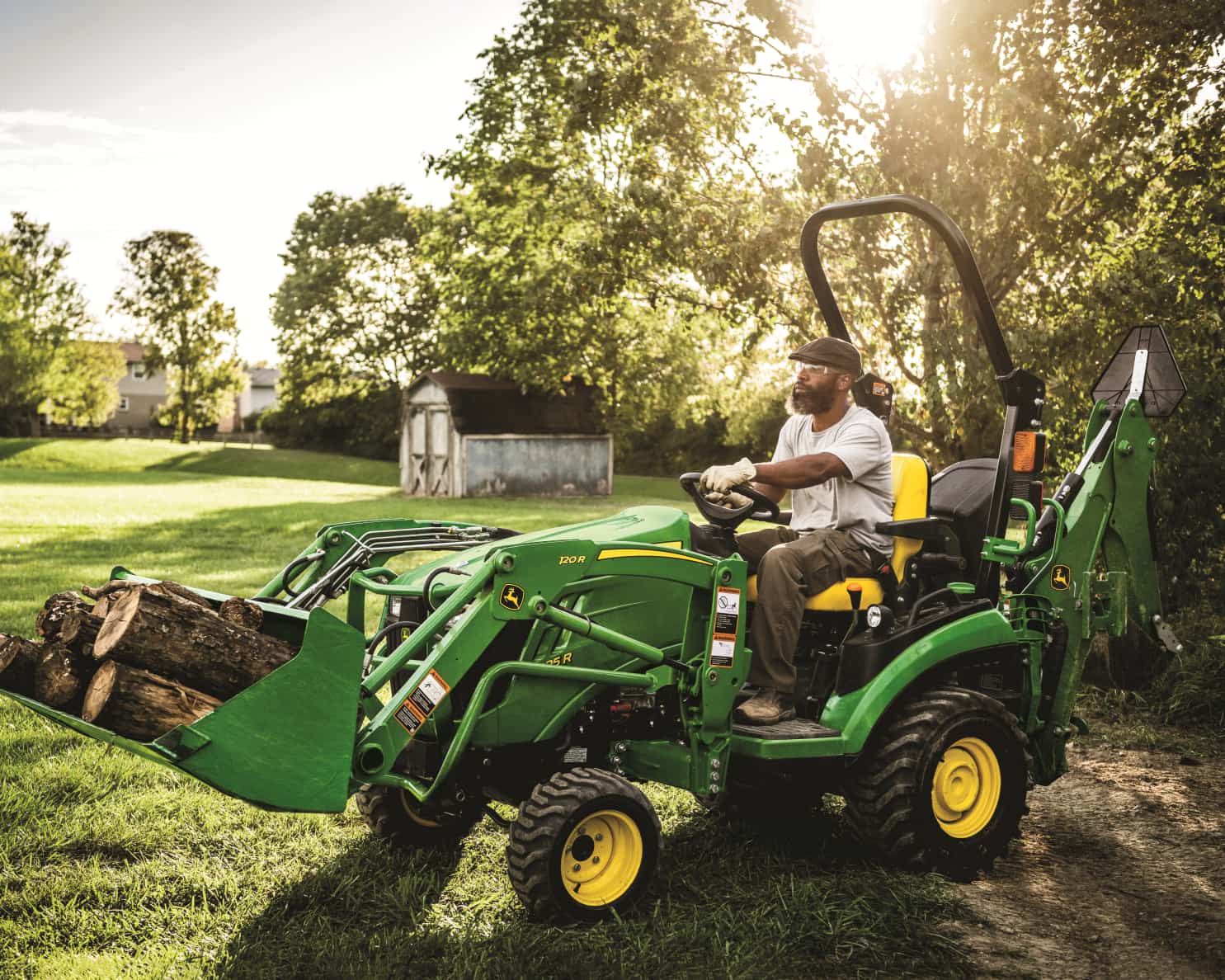
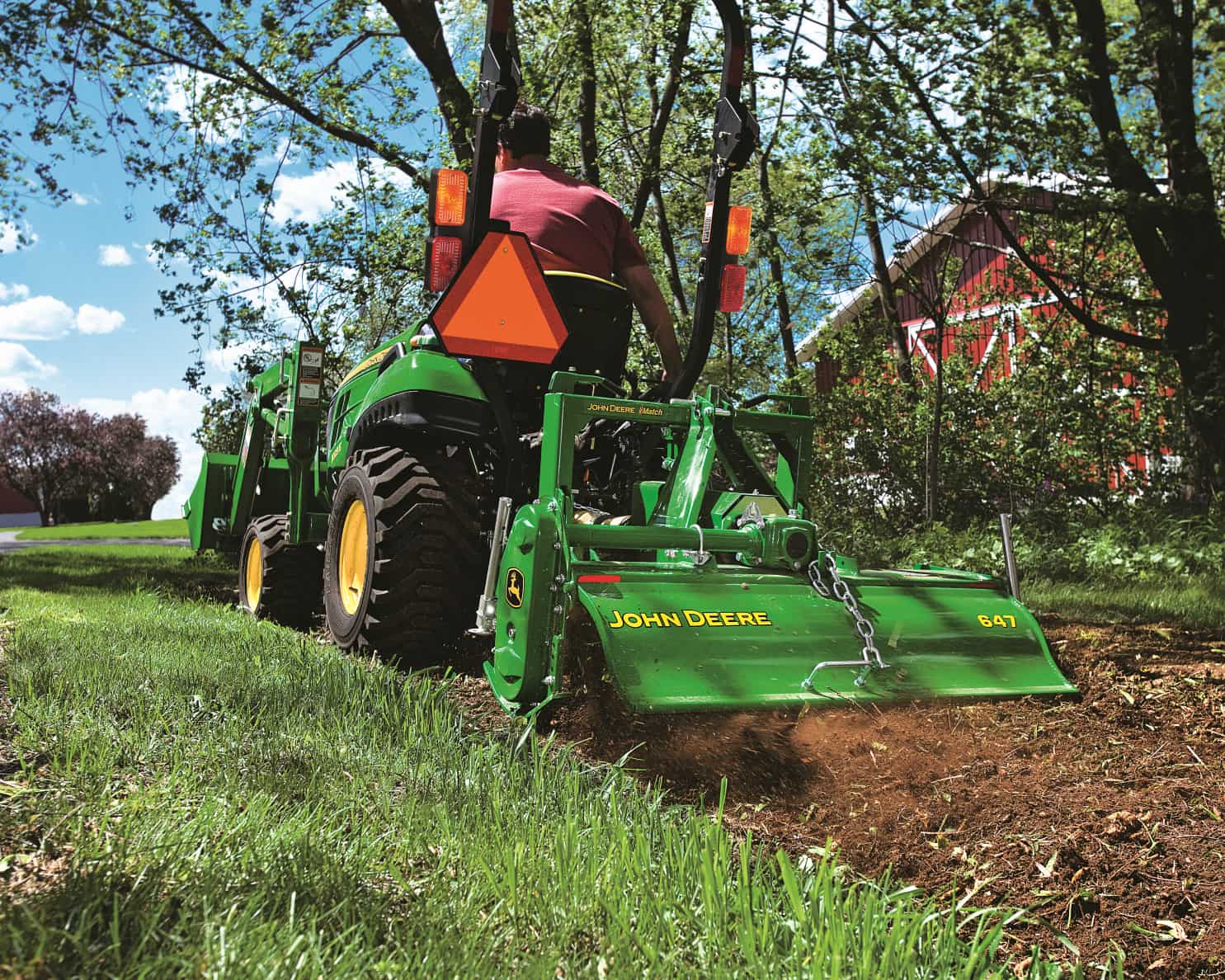
John Deere offers backhoe attachments for their 1 Series, 2 Series, and 3 Series compact utility tractors, turning a multi-purpose machine into a capable digging tool without the cost of a standalone excavator.
A dedicated mini excavator doesn’t always make sense. If you already own a compact utility tractor and excavation projects come on an infrequent basis, a backhoe attachment can be a sufficient and cost-effective alternative for light drainage work.
John Deere offers backhoe attachments for all of their compact utility tractors. This will boost the value and versatility of your tractor, expand your digging capabilities, and keep your equipment storage needs to a minimum.
When A Backhoe Attachment Makes Sense
- Cleaning and maintaining existing drainage ditches that aren’t severely silted
- Digging trenches for drainage tile on smaller acreages
- Light pond bank work and debris removal
- Properties where a compact utility tractor is already earning its keep in other tasks
When to Step Up to a Dedicated Mini Excavator
- New pond excavation or significant reshaping
- Deep or extensive drainage construction
- Work close to water where stability and precision matter
- Projects requiring significant digging reach or depth
For many farmers and rural property owners in the Northeast, the right answer depends on how often you find yourself excavating. If digging tasks come once a season, a tractor-mounted backhoe is a smart addition to your existing lineup. If water management is a recurring, significant part of your task list, a dedicated mini excavator is worth considering.
Want to rent a mini excavator? Check out our blog to learn more.