
John Deere’s lineup of Gators has always offered a wide range of choices for property owners. But as technology continues to advance, the choice between electric and gas models becomes increasingly competitive. With the all-new Gator GX and GX Crew models — alongside the XUV and HPX families — there’s more to think about when purchasing the best work vehicle for your needs. Here’s a practical breakdown of what each powertrain delivers and how those models complement how, when, and where you work.
Find Your Nearest United Ag & Turf
The Case for a John Deere Electric Gator
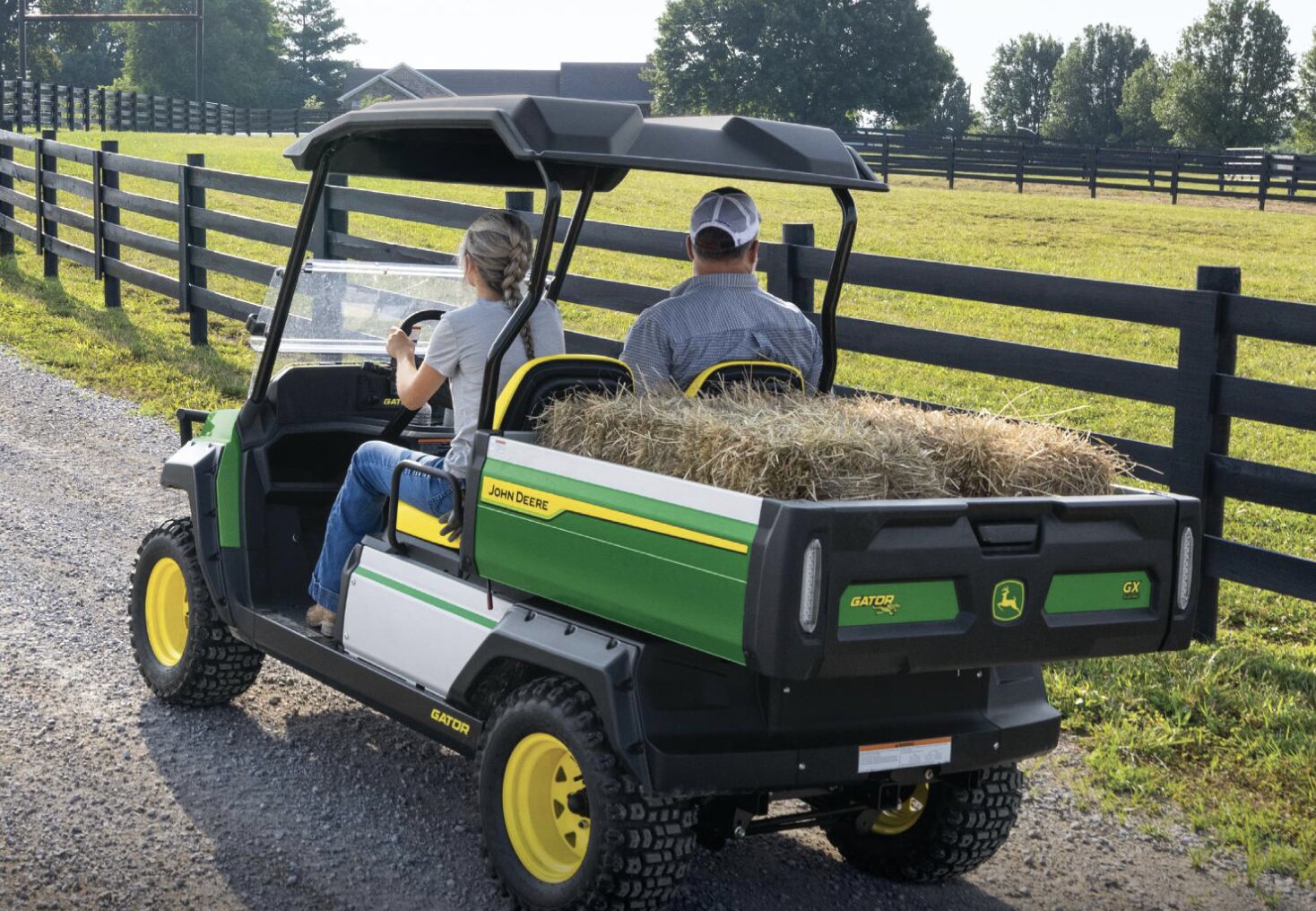
The 2026 electric Gator lineup features two new models: the two-seat Gator GX and the four-seat Gator GX Crew. Both run on a high-torque battery that can be charged from a standard 120V grounded outlet — no special charging infrastructure needed. With regenerative braking and quick charging, each model is rated for more than 8 hours of continuous operation.
In the Northeast, the electric Gator is a great choice for many property owners. Properties with livestock, greenhouses, or indoor storage facilities will benefit from zero exhaust emissions and reduced noise. These quiet models are also especially appealing for residential property owners with nearby neighbors.
Here’s a major benefit to owning an electric Gator: reduced maintenance costs. No engine means no oil changes, no air filter service, no fuel stabilizers, and no challenging winter storage checklists. For owners who want a capable utility vehicle without extensive maintenance requirements, an electric Gator offers a clear advantage.
The two-seater GX can haul up to 800 pounds in its cargo box and tow up to 1,500 pounds. These numbers work well for most light-to-medium property tasks. The GX Crew’s fold-down rear seats convert to a 250-pound cargo platform when you need the extra space.
The Case for a Gas-Powered Gator
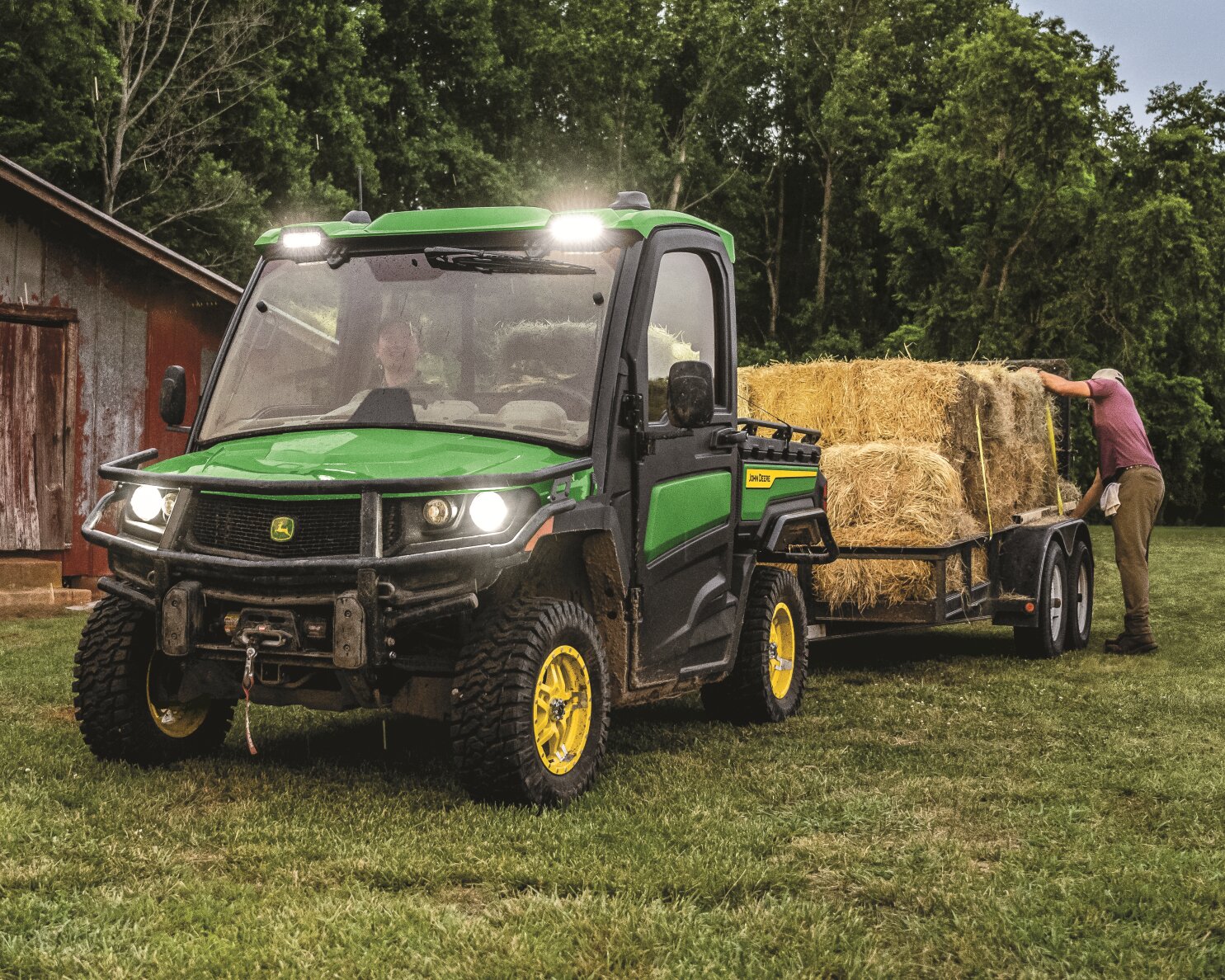
John Deere’s gas-powered Gators set the standard for versatile property maintenance machines — that’s why models like the XUV835M and HPX615E are mainstays here in the Northeast. If you need higher sustained output across longer working days and rougher terrains, a gas engine will deliver. The ability to refuel in minutes, rather than charging for hours, is an obvious benefit for many property owners. Plus, in our brutal winters, a gas engine can perform more reliably in cold weather than a battery-powered model.
For task lists that require full days through varied jobs — hauling firewood, feeding livestock, towing, etc. — a gas-powered Gator offers the necessary payload capacity where an electric model might not follow through. The XUV835M and XUV855M are popular choices for their cab options, climate control, and high tow ratings.
How to Choose
If your Gator use and workload are concentrated around a single location like a barn or garage — with overnight charging available — an electric Gator GX is worth serious consideration. If you’re running longer days with heavier workloads or working through the worst of winter, a gas model remains more reliable for your use profile.
Luckily, you don’t have to guess which Gator is right for you! Our team at United Ag & Turf is here to discuss the needs of your specific operation and help match you with the perfect model for your property. Give us a call or visit your nearest dealer today.
Find Your Nearest United Ag & Turf
Frequently Asked Questions
What is the range of the John Deere electric Gator on a full charge?
The 2026 John Deere Gator GX and GX Crew are rated at more than eight hours of continuous operation on a full charge. Range varies based on terrain, payload, and operating conditions — hilly terrain and heavier loads will reduce run time, while regenerative braking during descents helps extend it. Both models charge fully overnight on a standard 120V grounded outlet.
Is a gas vs. electric Gator better for cold Northeast winters?
For year-round use in the Northeast, a gas-powered Gator is generally the more reliable choice through winter. Lithium-ion batteries lose capacity in cold temperatures, which means reduced range for electric models during the coldest months. The gas-powered XUV and HPX families deliver consistent performance regardless of temperature and refuel in minutes — an advantage when you’re working through a Northeast winter.
Can the John Deere Gator GX tow a trailer?
Yes. The Gator GX electric model has a standard rear receiver hitch and a tow rating of up to 1,500 pounds — sufficient for light trailers, small equipment, and typical property work. For heavier towing demands, gas-powered XUV models offer higher tow ratings and are the better fit for sustained hauling tasks.